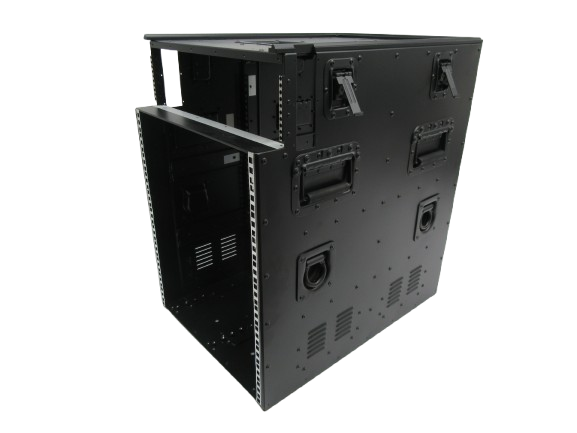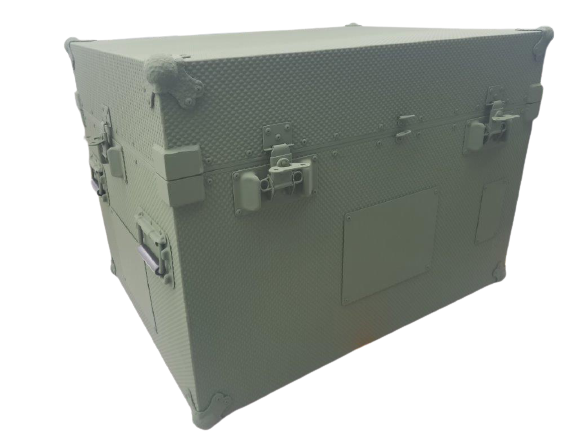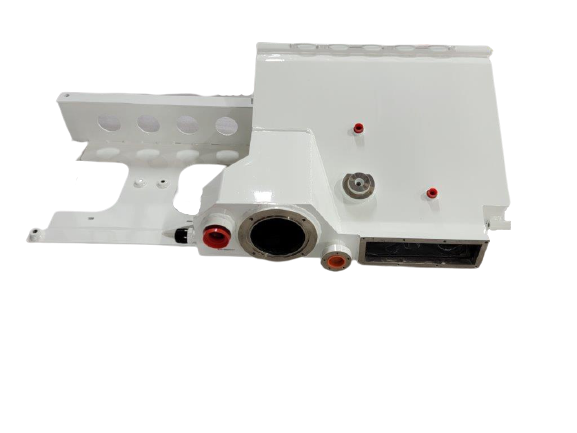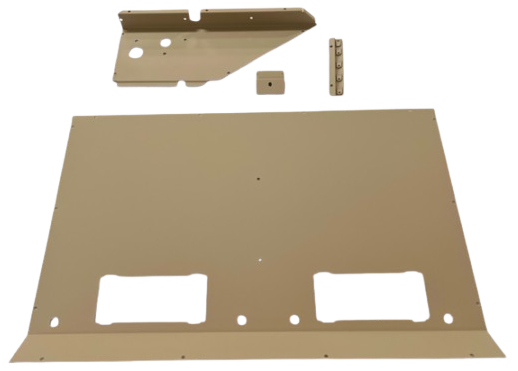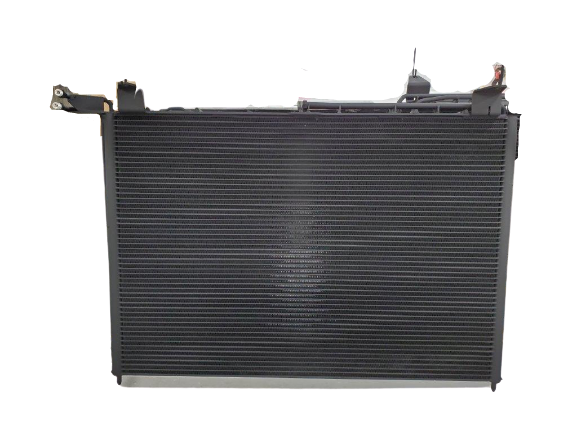
Sierra Spray Painting Ltd. is a trusted industry leader in CARC (Chemical Agent Resistant Coatings) for military applications. With over two decades of expertise in Mil-Spec CARC painting, Sierra stands out for its dedicated, knowledgeable, and uncompromising staff. Our team collaborates closely with esteemed clients, including the Canadian Government, the U.S. Military, GM Defence, and international partners from South Africa and other major countries worldwide.
We proudly offer a comprehensive facility that meets all your CARC coating needs. Our services include:
- Pre-Treatment (TT-C-490 & MIL-T-704)
- Sandblasting (Aluminum Oxide, Glass Bead, Plastic)
- Liquid (MIL-PRF-53072/64159) & Powder Painting (MIL-PRF-32348)
- Custom Part Marking (MIL-STD-130)
- Sub-Assembly
- Certificate of Compliance (COC)
- First Article Inspection (FAI)
- Direct Shipment Labels and Packing Slips


Sierra provides seamless solutions for your CARC coating requirements as a one-stop job shop, ensuring efficiency and reliability from start to finish.
Our expertise extends to high-volume production runs, spare parts, and rework components for the defense industry. We have achieved significant success with programs such as MRAP (Mine-Resistant Ambush Protected) vehicles, consistently delivering top-quality results.
Environmental responsibility is at the heart of our operations. At Sierra, we prioritize eco-friendly practices by using advanced water-borne materials. These materials offer substantial environmental benefits as they are free from hazardous air pollutants (HAPS), lead, and chromates and feature low levels of volatile organic compounds (VOC). Additionally, water-borne coatings deliver enhanced performance, smoother surface finishes, and greater hardness and resistance to marring.
Sierra Spray Painting Ltd. is proud to provide industry-leading CARC coatings daily, earning a distinguished reputation as the finishing industry’s benchmark for excellence in CARC coating solutions.
MIL Paint Specifications
- DOD-P-15328 PRIMER (WASH), PRETREATMENT (FORMULA NO. 117 FOR METALS) (METRIC)
- MIL-DTL-5541 (MIL-C-5541) CHEMICAL CONVERSION COATINGS ON ALUMINUM AND ALUMINUM ALLOYS
- MIL-DTL-18264 (MIL-F-18264) FINISHES, ORGANIC, WEAPONS SYSTEMS, APPLICATION AND CONTROL OF
- MIL-DTL-53022 (MIL-P-53022) PRIMER, EPOXY COATING, CORROSION INHIBITING LEAD AND CHROMATE FREE
- MIL-DTL-53030 (MIL-P-53030) PRIMER COATING, EPOXY, WATER BASED, LEAD AND CHROMATE FREE
- MIL-DTL-53039 (MIL-C-53039) COATING, ALIPHATIC POLYURETHANE, SINGLE COMPONENT, CHEMICAL AGENT RESISTANT
- MIL-DTL-53072 (MIL-C-53072) CHEMICAL AGENT RESISTANT COATING (CARC) SYSTEM APPLICATION PROCEDURES AND QUALITY CONTROL INSPECTION
- MIL-DTL-64159 (MIL-C-46168) CAMOUFLAGE COATING, WATER DISPERSIBLE ALIPHATIC POLYURETHANE, CHEMICAL AGENT RESISTANTCAMOUFLAGE COATING, WATER DISPERSIBLE ALIPHATIC POLYURETHANE, CHEMICAL AGENT RESISTANT
- MIL-PRF-22750 (MIL-C-22750) COATING, EPOXY, HIGH-SOLIDS
- MIL-PRF-23377 (MIL-P-23377) PRIMER COATINGS: EPOXY, HIGH-SOLIDS
- MIL-PRF-32348 POWDER COATING, CAMOUFLAGE CHEMICAL AGENT RESISTANT SYSTEMS
- MIL-PRF-85582 (MIL-P-85582) PRIMER COATINGS: EPOXY, WATERBORNE
- TT-C-490 CHEMICAL CONVERSION COATINGS AND PRETREATMENTS FOR METALLIC SUBSTRATES (BASE FOR ORGANIC COATINGS)


What Does Chemical Agent Resistant Coating (CARC) Stand For?
CARC stands for Chemical Agent Resistant Coatings. These coatings are used extensively on most military vehicles and equipment. They are high-performance coatings that were developed to withstand decontamination during a chemical warfare attack. These coatings produce a non-porous coat that impedes radioactivity, chemical and biological contaminants from penetrating the coating and the base material. Instead of penetrating the coating, chemicals bead up on the exterior of the surface and are washed off easily. In turn, these vehicles can be used over again without the concern of future contaminants and with the security of resisting further chemical attacks. There are three types of coatings in the CARC system: an epoxy polyamide primer, an aliphatic polyurethane paint (PUP), and epoxy polyamide enamel. Each of the coatings is supplied as a two-component system. When the two components are combined, a terminal reaction begins which makes an impermeable coating.

What Does Volatile Organic Compound (VOC) Stand For?
Volatile Organic Compounds are the organic solvents used in standard paint formulations that serve as the carrier for paint pigment. When the paint dries, the odor is from the evaporation of VOCs used in the solvent vehicle and the tinting pigments. Some of the more common VOCs used in paint as solvents and preservatives include formaldehyde and benzene. Pigment chemicals can include lead, cadmium, and chromium. The “fresh paint” smell we often experience is VOC emissions from volatile chemicals like diethyl phthalate and dibutyl. Because of the negative health effects of VOCs, Sierra strives to use paint that contains extremely low-VOC or no-VOC formulations.

What Does Mine Resistant Ambush Protected (MRAP) Stand For?
MRAP stands for Mine-Resistant Ambush Protected. These vehicles are designed to withstand improvised explosive devices (IEDs) and ambush attacks, providing enhanced safety for military personnel in hostile environments. Their rugged construction and specialized coatings, including CARC, are critical in ensuring durability and protection.